
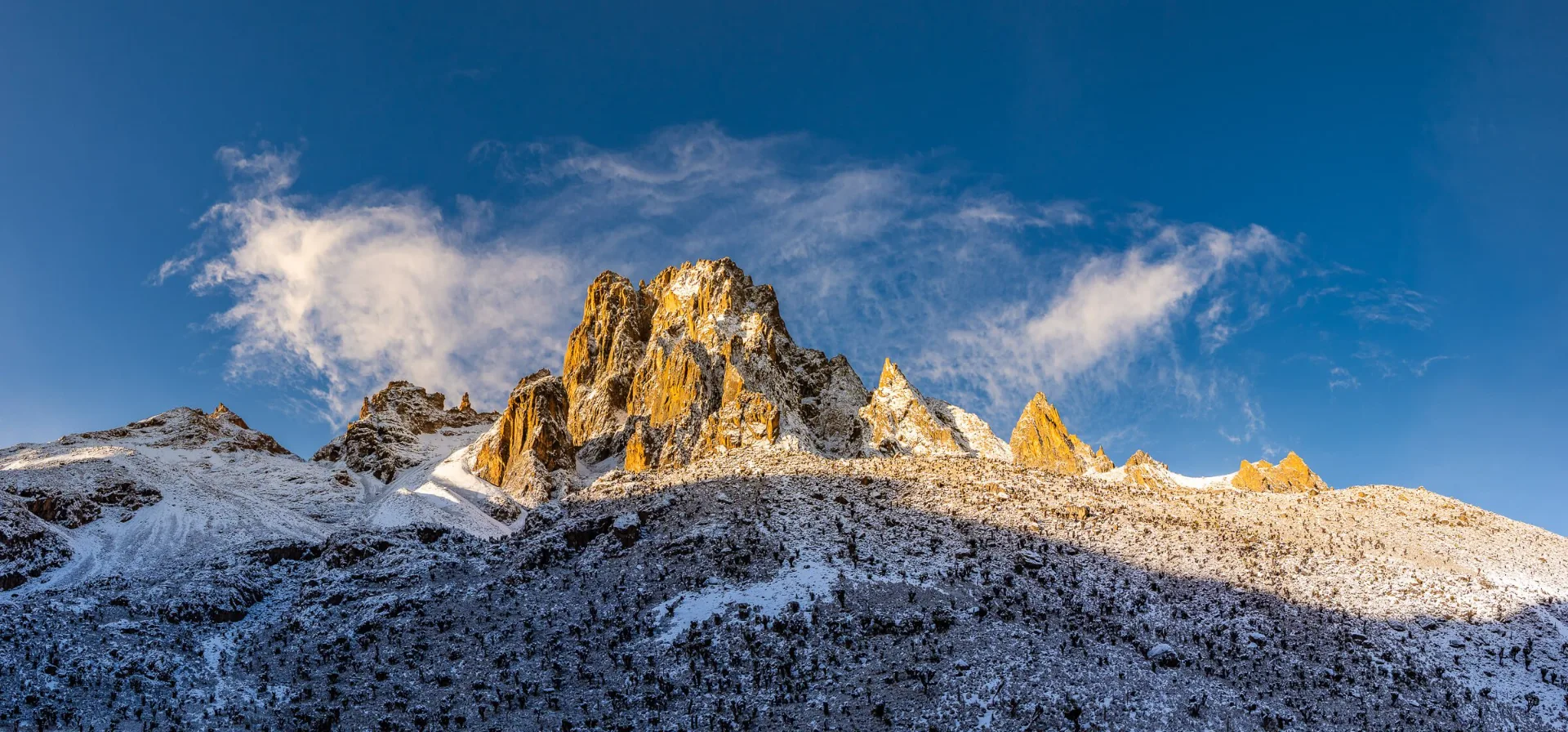
Mount Kenya
Trek to Point Lenana (4,985 m) through giant lobelias and Afro-alpine moorland on Africa's second-highest peak.
About Mount Kenya
Mount Kenya is Africa's second-highest mountain at 5,199 metres, a UNESCO World Heritage Site since 1997, and the geographic and spiritual heart of the Kikuyu people, who call it Kirinyaga — 'mountain of brightness.' The extinct stratovolcano is capped by jagged twin peaks (Batian and Nelion) that require technical climbing, while the third summit, Point Lenana at 4,985 metres, is accessible to trekkers with no climbing experience. The mountain's ecological zones are stacked like concentric rings: dense montane forest below 3,000 metres gives way to a bamboo belt, then moorland studded with giant lobelias and otherworldly senecios, then alpine desert and glaciers — though the glaciers are receding fast and may disappear within two decades. The national park and surrounding forest reserve protect 715 square kilometres of unique Afro-alpine habitat, critical water catchment for millions of Kenyans, and populations of elephant, buffalo, black rhino, and the endangered Mount Kenya mole-shrew found nowhere else on Earth.
When to Go
January to February and August to September are the driest trekking seasons with the clearest summit views. March to May long rains and October to November short rains make trails muddy and obscure views, though the mountain is climbable year-round.
What You'll See
Montane forest zone supports elephant, Cape buffalo, black rhino, giant forest hog, black-and-white colobus monkey, and Sykes' monkey. The bamboo belt is home to bongo (one of Kenya's rarest and most elusive antelopes). Above 3,500 metres, rock hyrax, duiker, and Mount Kenya mole-shrew. Birders find Hartlaub's turaco, Jackson's francolin, and the scarlet-tufted sunbird.
Your Journey Begins
Nanyuki town on the northwestern flank is the primary access point — 200 km from Nairobi (3 hours via Thika Superhighway). The Sirimon, Naro Moru, and Chogoria routes each start from different sides of the mountain, all reachable from Nanyuki or Embu. Scheduled flights from Nairobi Wilson Airport to Nanyuki airstrip take 50 minutes.
Within Mount Kenya
Sirimon Route
The driest, most gradual route — best for acclimatisation and the stunning Mackinder Valley moorland.
The Sirimon route approaches Mount Kenya from the northwest, starting at 2,660 metres and passing through some of the mountain's finest montane forest and moorland. It is considered the driest and most gradual route, making it the best choice for acclimatisation. The Mackinder Valley section between Old Moses Camp and Shipton's Camp traverses a spectacular open valley of giant groundsels and lobelias, with views of the twin peaks on clear mornings. Most 4-5 day itineraries ascend via Sirimon and descend via Chogoria or Naro Moru.
Chogoria Route
The most scenic route — Lake Michaelson in the Gorges Valley and the dramatic eastern glacial approach.
The Chogoria route ascends from the eastern side of Mount Kenya, widely regarded as the most scenic approach. The trail passes through pristine bamboo forest, emerges onto the Gorges Valley — a dramatic glacial cirque with Lake Michaelson at its base — and climbs through the Temple and Giant's Billiards Table to reach the summit circuit. The approach through Chogoria town passes through tea estates and rural Embu countryside. Many trekkers combine Chogoria (ascent) with Sirimon (descent) for the definitive Mount Kenya traverse.
Naro Moru Route
The fastest route to Point Lenana — steep, direct, and famous for the Vertical Bog challenge.
The Naro Moru route is the shortest and most direct path to Point Lenana, ascending from the western slopes via the Meteorological Station and the infamous 'Vertical Bog' — a steep, marshy section between 3,300 and 3,900 metres that tests every trekker's resolve. What it lacks in scenic variety it makes up in efficiency: strong hikers can reach the summit in three days, though four is recommended for acclimatisation. Naro Moru town is a convenient stop on the Nairobi-Nanyuki road.
More Destinations in Kenya
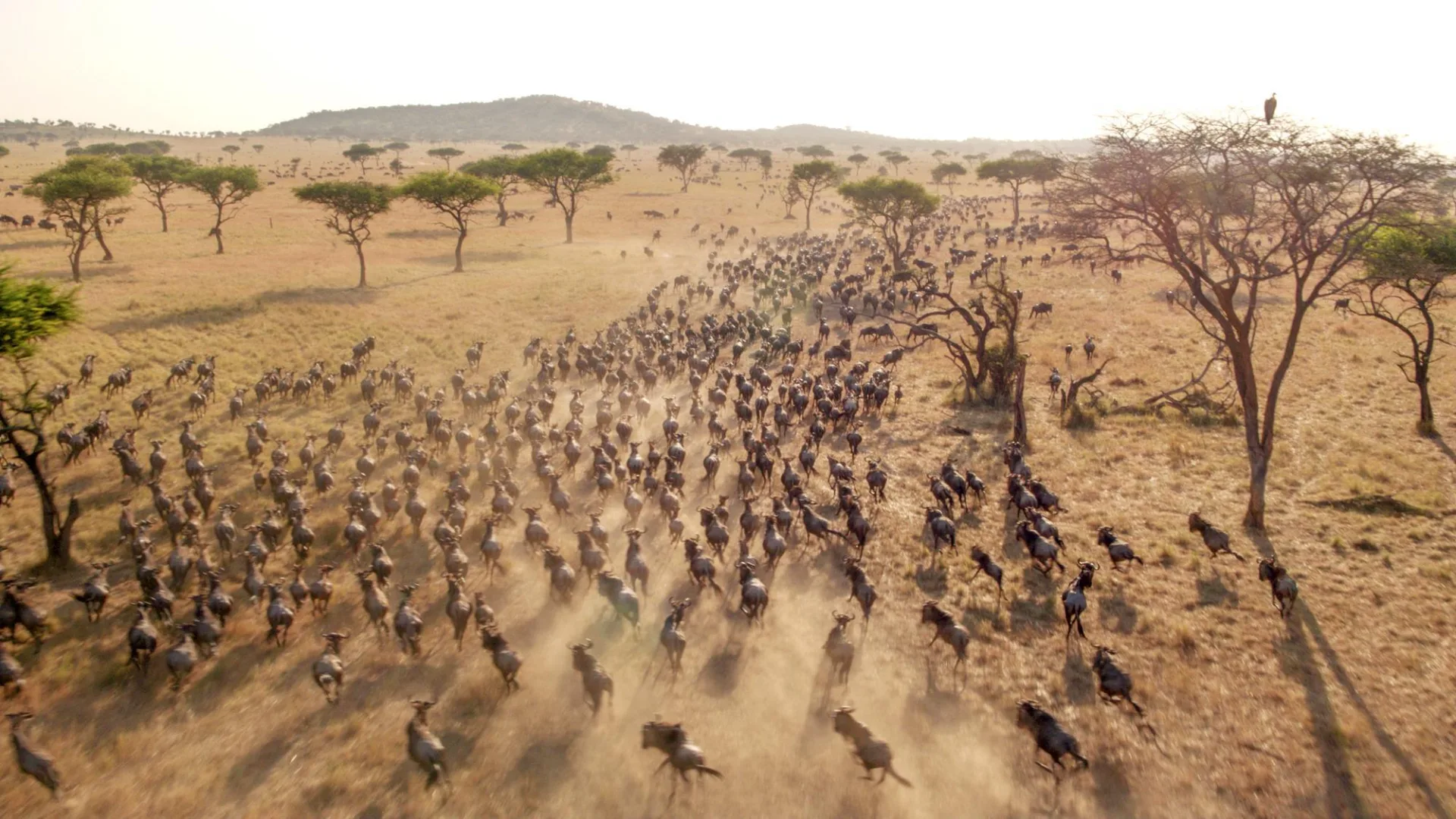
Masai Mara National Reserve
Africa's most famous reserve — Great Migration river crossings, 850 lions, and the pioneering conservancy model.
Explore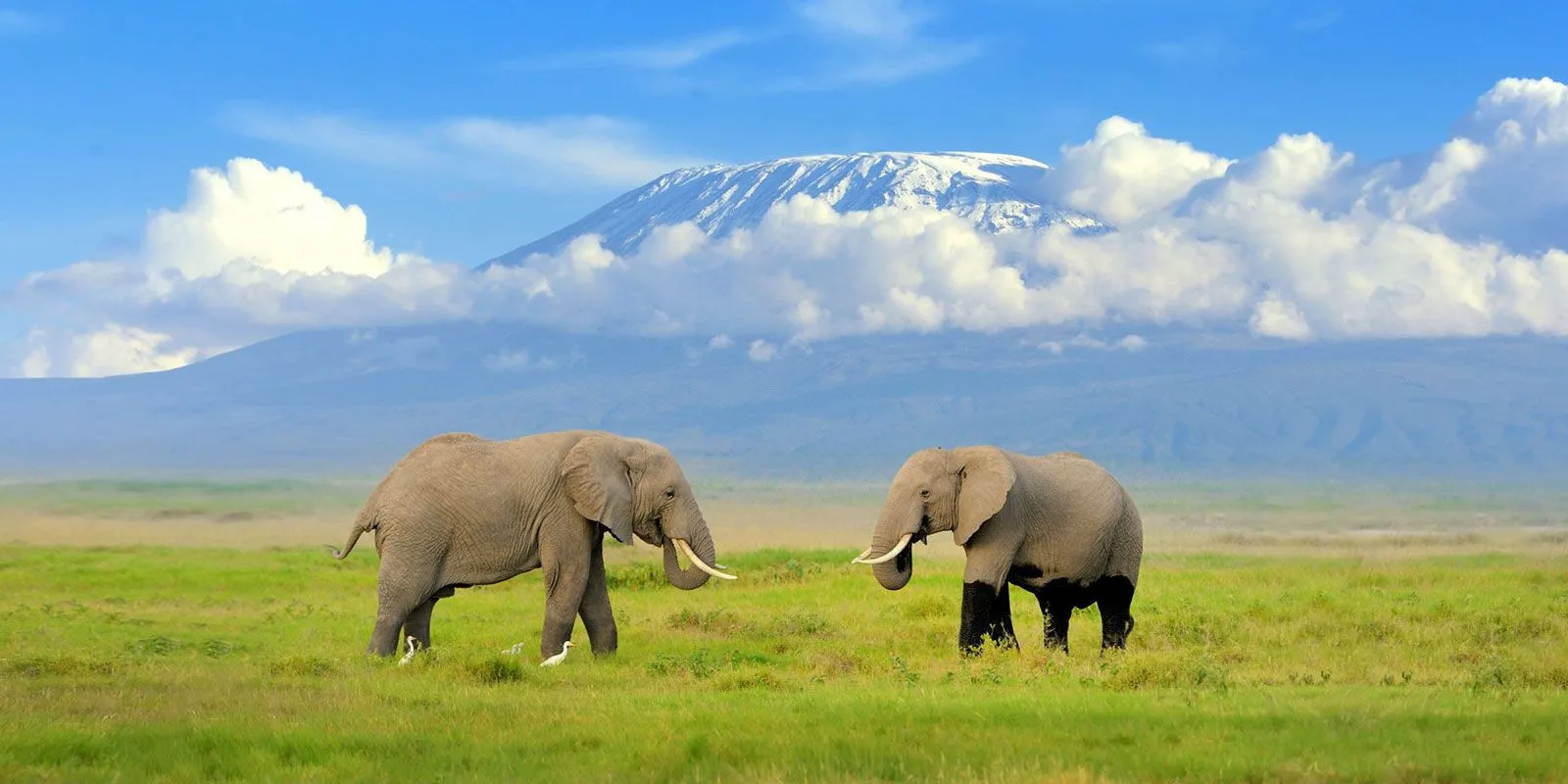
Amboseli
Africa's most iconic elephant herds framed by the snow-capped summit of Kilimanjaro.
Explore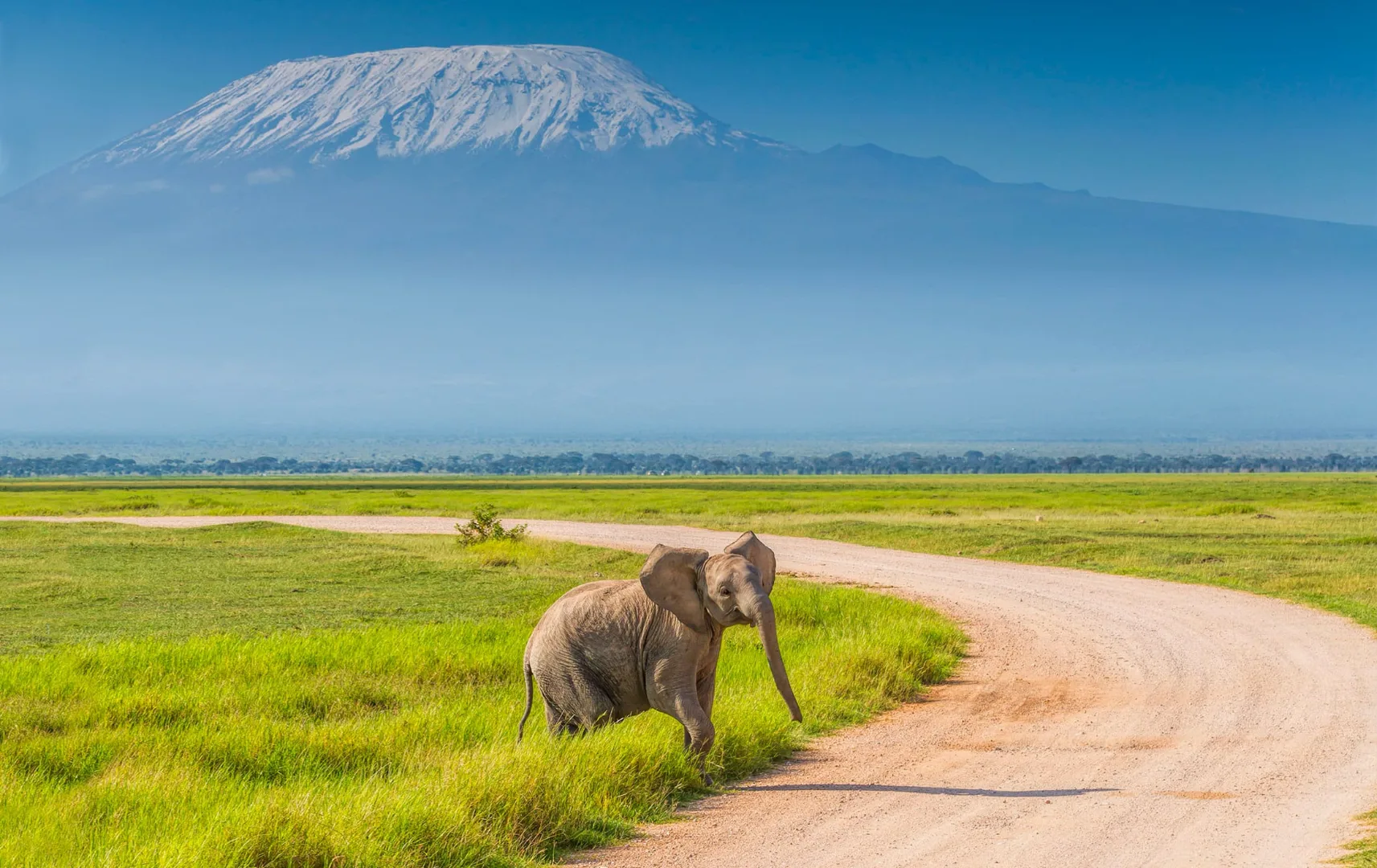
Amboseli National Park
Africa's most iconic photo — big-tusked elephants framed by Kilimanjaro's snow-capped peak.
Explore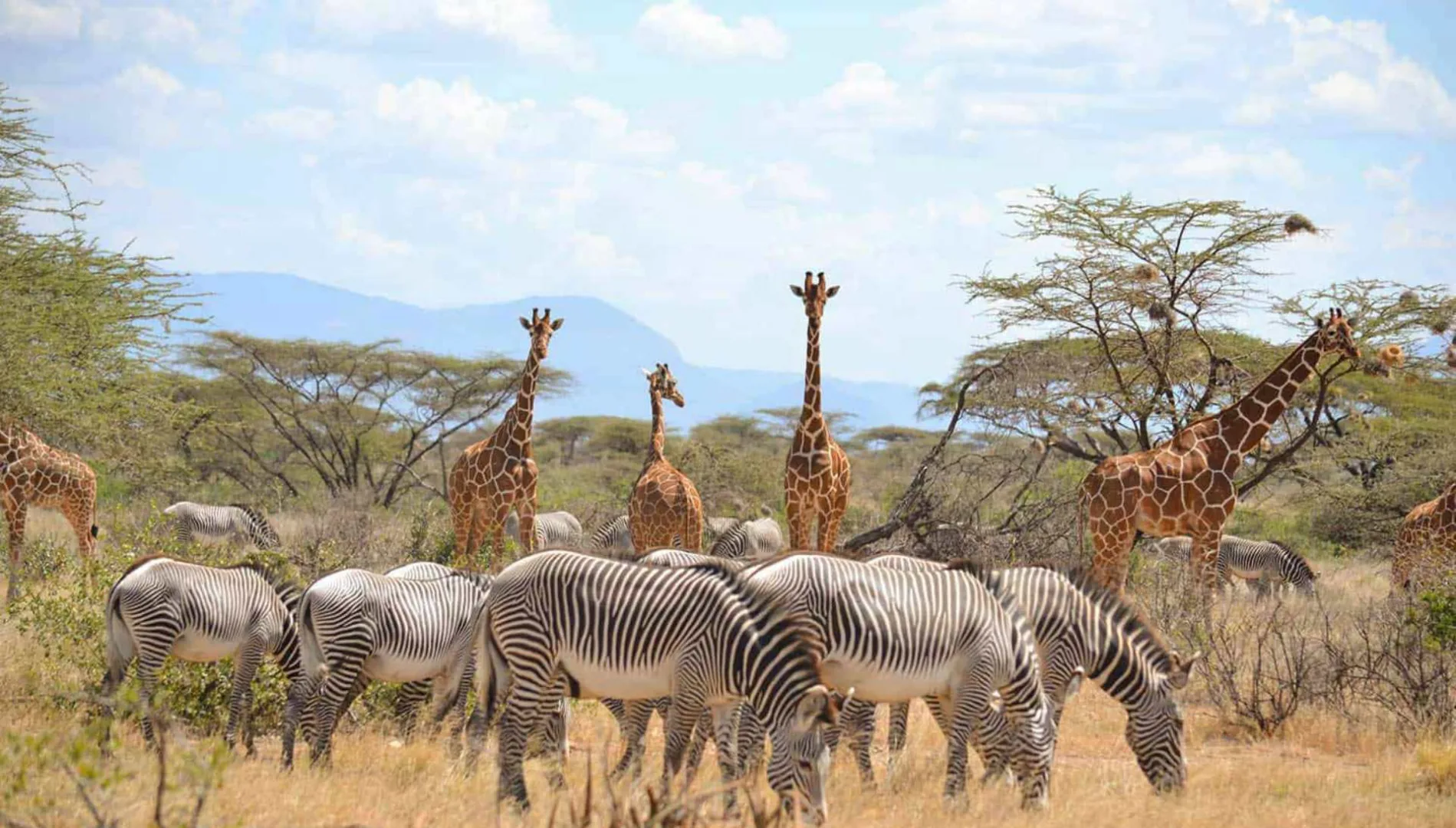
Samburu National Reserve
Kenya's arid frontier — the Samburu Special Five species found nowhere else on a classic safari circuit.
ExplorePlan Your Safari
Let our experts craft a bespoke Mount Kenya itinerary tailored to your dreams.